When Nothing Works on Your Bertioga Drain: The Escalation Path
You have tried the plunger. You have fed the cable down the drain until your arms ached. You have poured in the chemical drain cleaner, waited, and flushed with hot water. And the water is still sitting there, maybe even rising. If that sounds familiar, you are not alone — and you are not out of options. This is the point where DIY stops and a professional desentupidora em Bertioga SP takes over, because the blockage is deeper or more complex than a household tool can reach.
Inventory: What You Have Already Tried, and Why It Failed
Before you call anyone, it helps to understand what each failed attempt tells you about the clog. The three standard household methods each work on a different kind of problem, and each has a clear limit.
The plunger
A plunger uses pressure to dislodge a soft, localized clog near the drain opening. If the water does not budge after a few firm strokes, the blockage is probably past the trap — or it is not soft material at all. A plunger cannot move a clog that is more than a meter down the line.
The hand cable
A manual drain snake can reach further, but it is only as effective as the head you use and the length of the cable. Most household cables top out around 5 to 8 meters and cannot negotiate sharp bends or old, rough pipe walls. If the cable comes back clean but the water still stands, you are likely dealing with grease buildup, roots, or a collapsed section that the cable simply slid past.
The chemical cleaner
Chemical cleaners work on organic matter like hair and soap scum, but they are largely ineffective against grease, roots, and solid debris. Worse, they can damage older pipes and create a hazardous situation for anyone who later opens the drain. If a chemical cleaner has already been used, tell the technician before they start. They may need to flush the line first to avoid burns or fumes.
If all three have failed, the problem is almost certainly in the main line or a branch that serves more than one fixture. That is the point where a professional service such as a desentupidora Bertioga becomes the practical next step, not a last resort.
The Escalation Ladder: From DIY to Professional Equipment
Think of drain clearing as a ladder. You have already climbed the first three rungs. The next rungs require equipment and training that most homeowners do not have — and that is not a failure on your part. It is simply the nature of the problem.
Step 1: A professional inspection
Before any tool goes into the pipe, a technician will usually inspect the line with a camera or a rod. This tells them where the blockage is, what it is made of, and whether the pipe itself is damaged. Skipping this step is one of the most common mistakes in drain work, because it leads to the wrong tool being used.
Step 2: Mechanical clearing with a powered auger
A powered drain auger is the next step up from a hand cable. It has a longer reach, a stronger motor, and interchangeable heads for different types of clogs. For a stubborn blockage in a kitchen or bathroom line, this is often enough to restore flow.
Step 3: Hydro-jetting
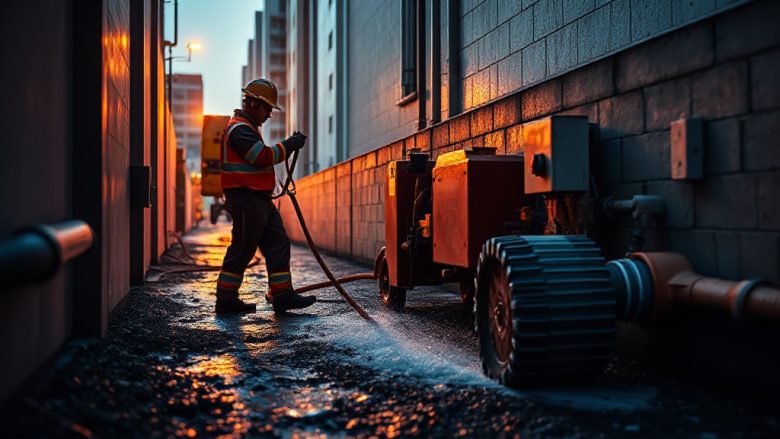
When grease, scale, or roots have narrowed the pipe, a high-pressure water jet is the tool of choice. Hydro-jetting scours the full inner diameter of the pipe, not just a hole through the clog. It is the standard method for main lines and commercial kitchens, and it is usually the point where a desentupidora Bertioga SP service brings in a truck-mounted unit.
Step 4: Root removal or pipe repair
If the camera shows roots or a broken section, clearing the clog is only a temporary fix. A root cutter can restore flow, but the long-term solution may involve lining or replacing the damaged section. This is why an inspection matters: it prevents you from paying for the same clearing job twice.
| Method | Best for | Typical limit |
|---|---|---|
| Plunger | Soft clogs near the drain | 1 meter or less |
| Hand cable | Hair and soap scum in branch lines | 5–8 meters, straight runs |
| Chemical cleaner | Organic matter only | No effect on grease or roots |
| Powered auger | Stubborn branch and main line clogs | 15–30 meters |
| Hydro-jetting | Grease, scale, roots, full-pipe cleaning | Full line length |
When to Stop Trying and Call for Help
There is a clear line between “keep trying” and “stop now.” Crossing it can turn a manageable clog into a flooded floor or a damaged pipe. Here are the signals that it is time to put the tools down.
- Multiple fixtures are backing up at once. If the sink, shower, and toilet are all slow or gurgling, the blockage is in the main line, not a single drain.
- Wastewater is rising, not draining. A drain that fills when you run water is a sign of a full blockage. Stop using water immediately.
- You smell sewage indoors. This can indicate a blocked vent or a break in the line, and it is a health concern.
- Your chemical attempt did not work. Repeated chemical use is risky. One attempt is enough; after that, the problem is beyond what chemicals can fix.
- You have a septic system. A backed-up septic tank needs professional pumping and inspection, not a drain snake.
If you recognize two or more of these signs, stop. The cost of a professional visit is almost always lower than the cost of water damage, pipe repair, or a ruined floor. And in Bertioga, where many homes are older or close to the water table, a slow drain can be an early warning of a bigger issue.
The Bottom Line: A Failed DIY Attempt Is Useful Information
Every failed attempt tells you something. The plunger that did nothing says the clog is deep. The cable that came back clean says the blockage is not a simple hair ball. The chemical that had no effect says the problem is grease, roots, or debris. Taken together, these are not wasted hours — they are a diagnosis you can hand to a professional.
When you call, describe exactly what you tried and what happened. That short conversation helps the technician arrive with the right equipment the first time. It also protects your pipes, because they will know whether chemicals are present and whether the line needs flushing before work begins.
Most importantly, do not keep escalating on your own. The next rung on the ladder requires a powered auger or a hydro-jetting unit, and those are not household tools. A professional drain service has the equipment, the camera inspection, and the experience to clear the line without damaging it. If you have reached the end of your DIY options, the smartest move is to stop, pick up the phone, and let a specialist take it from there.